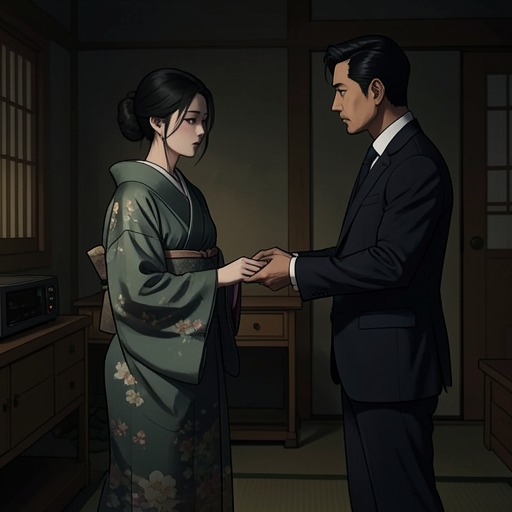
Mameha takes Chiyo as her younger sister
Memoirs of a GeishaMameha takes Chiyo as her younger sister after Chiyo has been removed from training, converting a period of imposed stagnation into a return to the demanding education required for a life as a geisha. The decision is both a personal opening and a financial bargain: Mother has stopped paying for Chiyo’s lessons, the okiya carries her growing expenses, and Mameha will not accept the proposed arrangement without first inspecting the accounts. When Chiyo resumes her studies, she is twelve and feels she is beginning again from the beginning.
The Debt Behind the Apprenticeship
Chiyo’s interrupted training is inseparable from the okiya’s system of debt. She has learned that the costs of becoming a geisha will not be borne by the household as a gift: once she works, she must repay the price of her acquisition as well as meals, lessons, and medical fees. The account books Mother keeps register a future labor obligation as much as a financial balance. Chiyo had imagined that money changed hands when she and Satsu were taken from home, and had feared Mr. Tanaka might have profited by helping sell them; what she had not understood was that she herself would be required to repay the cost.
Mother ends Chiyo’s lessons, saying she can no longer afford the training. When Mameha later raises the possibility of making Chiyo her younger sister, Mother presents the cessation as a consequence of hard times and invites Mameha to invest in the girl’s future. The appeal is not simply to Mameha’s judgment of Chiyo’s potential: it asks a successful geisha to assume a financial risk Mother no longer wants to carry.
A Bargain Between Mother and Mameha
Mother proposes that Mameha take a reduced share of Chiyo’s future earnings. If Chiyo repays her debts by twenty, Mother offers to pay Mameha the remainder she would ordinarily have earned, plus an additional thirty percent. When Mameha objects that she is being asked to undertake a potentially impossible task for less than the customary fee, Mother raises the bonus to double if Chiyo succeeds, while making clear that Mameha will receive nothing additional if she fails. The terms reveal how sharply the proposed mentorship is entangled with the okiya’s finances: Mother seeks to protect the household while offering Mameha a speculative return on Chiyo’s future work.
Mother’s comparison of Chiyo with Pumpkin makes that calculation explicit. She calls Pumpkin the safer investment and warns that Chiyo’s debts will grow worse before they improve. This concern includes more than lesson fees. Mameha’s standing means that an ordinary younger sister would surrender a larger portion of her earnings to her than she would to a less prominent older sister. The promise of mentorship therefore carries both access to training and a claim on the income that training may eventually produce.
Mameha initially declines. She notes that there are other promising girls in Gion who could become her younger sister without the same risk, and she refuses Mother’s reduced offer. But she does not close the question: instead, she asks to see how substantial Chiyo’s debt really is. Mother goes to fetch the account books, while Chiyo, sent out on errands before she can hear the rest of the conversation, waits without knowing whether the two women will agree. For her, the negotiation decides whether she can return to training or remain a maid.
Return to Lessons
After Mameha agrees to become her older sister, Chiyo goes back to school. The agreement restores the possibility of training, but it cannot restore the time already lost. During the two years since Mother stopped her lessons, Chiyo has forgotten much of what she learned; even before the interruption, she had not learned much, because her attention had been absorbed by other concerns. She describes the return not as resuming where she left off but as beginning lessons for the first time.
At twelve, Chiyo is nearly as tall as Mameha, yet age offers little advantage in a discipline where many pupils begin very young. Some have started at the traditional age of three years and three days, and geisha’s daughters may grow up with dance and tea ceremony woven into daily life. Chiyo must make up ground against students whose upbringing has already supplied much of the practice she lacks. Mameha’s sponsorship opens the school door; it does not erase the delay or make the work ahead easier.
The education itself extends beyond the shamisen. Chiyo begins learning the small drum called the tsutsumi, among the instruments used in stage performances. At banquets, a shamisen and perhaps a singer may suffice, but a spring performance such as Dances of the Old Capital can bring together six or more shamisen players, drums, and a Japanese flute. The breadth of this curriculum makes the stakes of her return concrete: becoming a geisha requires training across the arts, not merely the recovery of a single interrupted skill.
Mentorship, Earnings, and the Later Adoption
The younger-sister relationship gives Chiyo a route back into professional training, but it operates within the same economic structure that made her education precarious. The okiya pays costs and claims earnings; a geisha’s sponsorship can secure instruction while also directing a portion of the younger sister’s future income to the older sister. The bargain is therefore not a simple rescue from debt. It rearranges who will bear the risk of Chiyo’s development and who may benefit if she succeeds.
The later adoption of Chiyo into the Nitta household brings this arrangement into sharper focus. By the time her mizuage fee has been received, the sum is enough to repay her debts to the okiya. Had Mother not adopted her, some of that money would have gone to Chiyo herself. As a daughter of the household, Chiyo’s debts cease to exist because the okiya absorbs them, but the household also takes all her profits—not only from the mizuage, but thereafter. Her name changes first to Sayuri and, with adoption, to Nitta Sayuri. The change resolves the debt on paper by changing the claims attached to her earnings; it makes clear that the opportunity Mameha helped restore leads into an institution where care, training, debt, and control of income remain bound together.
Significance of the Decision
Mameha’s acceptance is a turning point because it changes Chiyo’s status from a girl left outside formal training into an apprentice with a viable path forward. The decision is not presented as uncomplicated generosity: Mameha weighs the debt, Mother negotiates the price, and Chiyo’s future labor underwrites the arrangement. Yet the same bargaining that exposes the okiya’s financial logic also makes Chiyo’s return possible. Her renewed education begins under a mentor’s protection, but the terms of that protection foreshadow how closely her artistic progress will remain tied to money, household authority, and the earnings her work can produce.